Short answer: Medical school is a memory problem disguised as an intelligence problem: 90-minute lectures at conversation speed, ward rounds where the teaching happens mid-stride, and study groups where the best explanation of the renal system you'll ever hear evaporates by dinner. An AI note taker fixes the capture half: record the lecture or study session from your phone, get a transcript, summary, and searchable notes, then turn them into flashcards and quizzes. CraftNote's free plan (2 hours of recording a week) covers a typical lecture load; here's the workflow that actually sticks.
← Back to Blog
AI Note Takers for Medical Students: Lectures, Rounds & Study Groups
One scope note up front: this is about the learning side of medical training (lectures, seminars, study groups, skills teaching). Real patient encounters are clinical documentation with their own rules and systems; keep those out of general-purpose recording tools. Everything below stays on the classroom side of that line.
Why medical lectures defeat handwritten notes
Lecturers speak at 140-160 words per minute; you write at 25-30. Every minute of a dense pharmacology lecture forces a triage decision (write this, lose that) made before you know what will matter. The result is familiar: notes that capture the first two-thirds of every mechanism and none of the clinical pearls the lecturer dropped while you were still writing. Recording flips the triage: capture everything first, decide what matters after, when you can see the whole lecture at once.
The workflow, hour by hour
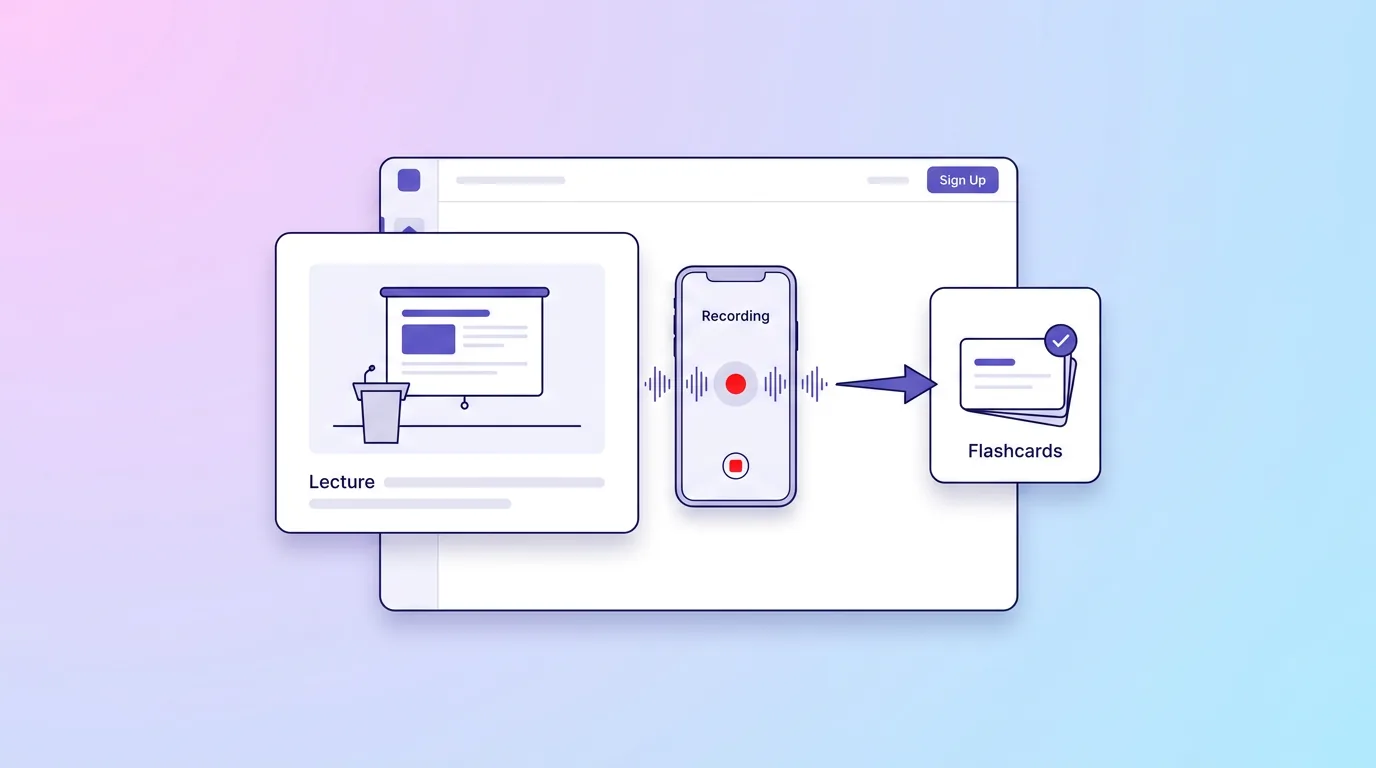
In lecture: phone on the desk, record, and take skeleton notes only: headings, diagrams, the things slides won't show. Your attention goes to understanding, not stenography. (Ask your program about recording policy first; most permit personal-study recording, some require asking the lecturer.)
Same evening (20 minutes): open the summary, not the full transcript. Fix the skeleton notes against it, then ask the note questions: "list the side effects she emphasized," "what did he say distinguishes nephrotic from nephritic?" Interrogating the material beats rereading it.
Before the exam: generate flashcards and quiz questions from the recording's content. Active recall from your own lectures outperforms generic question banks for course exams, because the questions match what your faculty actually taught. CraftNote builds both from any note.
Rounds, seminars, and the teaching you can't pause
Ward-round teaching and case discussions are where the real clinical reasoning gets modeled, and where note-taking is physically impossible. Policies differ sharply here: recording on the wards involves patient privacy even when the patient isn't present, so the default is don't record on clinical premises. Instead, use the two-minute voice-memo debrief right after: step out, talk through what the attending taught, and let the transcript become the note. The same technique turns your commute into review time.
Study groups: the best explanations you'll ever lose
Someone in your group explains cardiac axis better than any textbook, but only once, at 11 PM, three weeks before the exam. Record the session (with the group's OK), and that explanation becomes an asset: searchable, replayable, quizzable. Groups that record also argue less about "what did we decide to cover next week," because the action items are in the summary.
What to look for in a note taker as a student
Phone-first recording: lectures don't happen at your desk. Long-recording support: a 90-minute lecture shouldn't hit a 30-minute cap (check free-tier limits carefully; they vary wildly between tools). Study outputs, not just summaries: flashcards and quizzes from your own material are the compounding advantage. A price a student can survive: CraftNote's free plan covers 2 hours of recording and 10 uploads weekly; Pro is $9.99/month when lecture load outgrows it. For the general student picture beyond medicine, see our student note-taking guide.
Frequently Asked Questions
Is it OK to record medical school lectures?
Usually for personal study, but policies vary by school and by lecturer. Check your program's recording policy and ask when in doubt. Clinical settings are different: the default there is don't record; debrief afterward instead.
Can AI note takers make flashcards from lectures?
Some can. CraftNote generates flashcards and quiz questions from any recorded lecture or uploaded material, so review comes from what your faculty actually taught rather than a generic question bank.
What's the best free AI note taker for medical students?
Compare free tiers on the limits that matter for lectures: per-recording caps and weekly/monthly allowances. CraftNote's free plan allows 2 hours of recording per week with no 30-minute per-session cutoff, which fits a typical lecture schedule.
Should I record patient encounters as a student?
No. Patient encounters involve privacy rules and belong in clinical documentation systems under your program's supervision. Use recording for lectures, seminars, and study sessions, and use post-rounds voice debriefs for ward teaching.
Related reading
Turn this into action with CraftNote
Record meetings and lectures, then get AI transcripts, summaries, and action items.
Try CraftNote free