Short answer: The AI tools that actually save real estate agents time fall into five jobs: capturing client conversations (CraftNote), drafting listings and emails (ChatGPT), producing marketing visuals (Canva Magic Studio), touring properties remotely (Matterport), and following up with leads automatically (Structurely). Most have free tiers, so start with the job that eats most of your week, not with the longest feature list.
← Back to Blog
Best AI Tools for Real Estate Agents in 2026 (By the Job They Do)
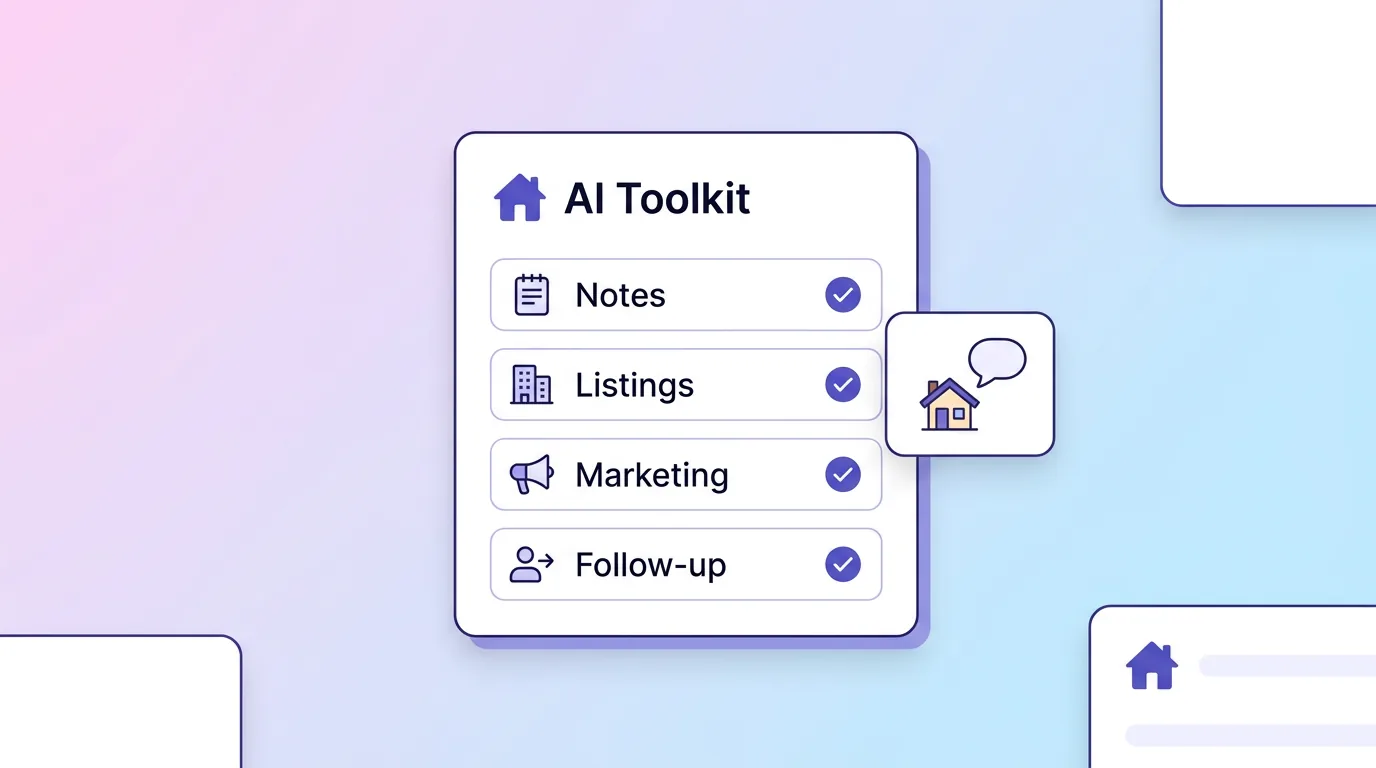
Full disclosure up front: we're CraftNote, so we have a horse in this race: it's in the list below, in the slot where we think it genuinely belongs. Everything else is here on merit, described by what it does, not by affiliate links (there are none).
Real estate is a conversation business. An agent's week is showings, listing appointments, buyer consultations, phone calls, and then the paperwork shadow of all of it: follow-up emails, CRM updates, listing copy, social posts. That shadow work is exactly what current AI tools are good at. Here's what's worth your time in 2026, organized by the job it does.
| Tool | The job it does | Free tier |
|---|---|---|
| CraftNote | Records showings & client meetings, turns them into notes and action items | Yes |
| ChatGPT | Drafts listing descriptions, emails, market updates | Yes |
| Canva Magic Studio | Listing flyers, social posts, image cleanup | Yes |
| Matterport | 3D tours with AI-generated property descriptions | Limited |
| Structurely | AI lead follow-up over text/email | No |
| Gemini for Workspace | AI inside Gmail/Docs you already use | Limited |
| Grammarly | Cleans up every client-facing message | Yes |
1. CraftNote: capture every client conversation
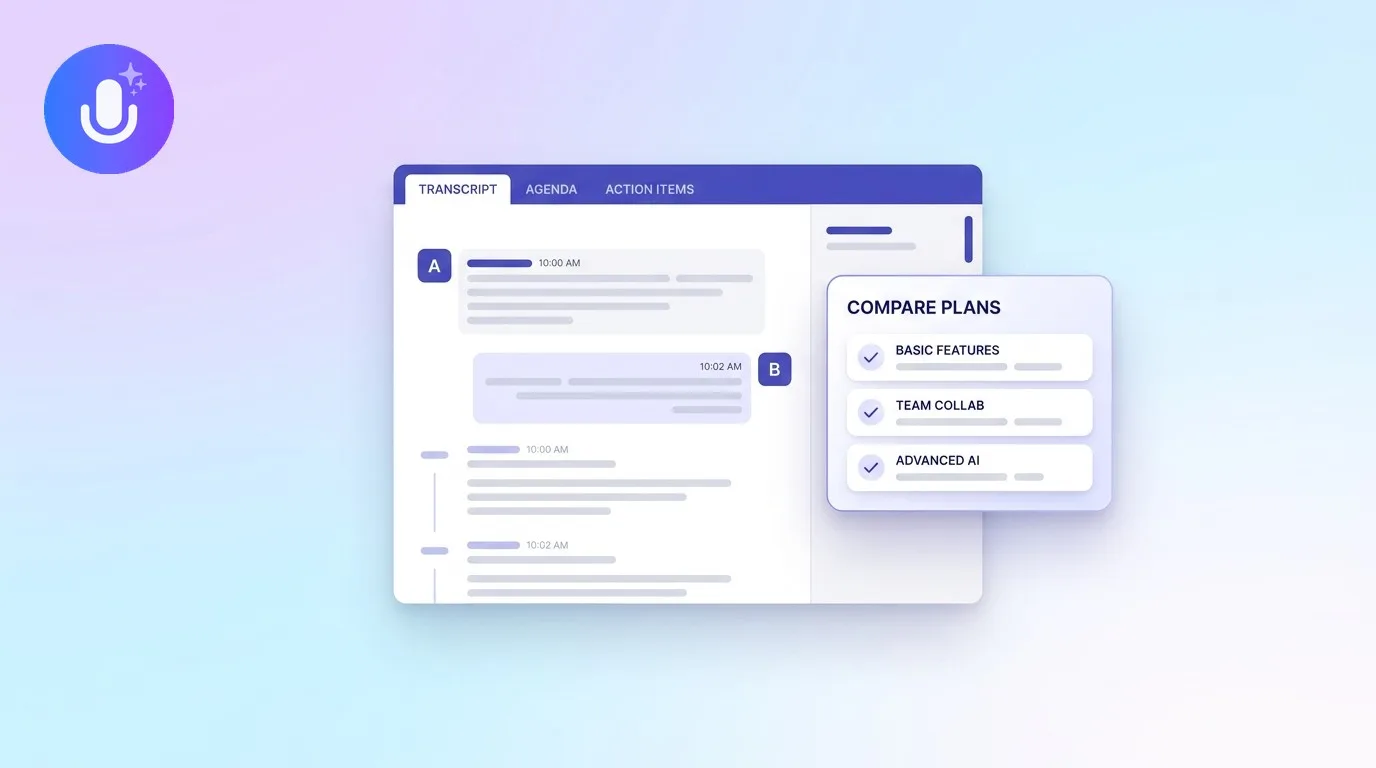
The most expensive information an agent loses is what clients say in person: the buyer's real budget ceiling mentioned in the car between showings, the seller's timeline, the objection at the kitchen counter. CraftNote records those conversations from your phone (no bot, works face-to-face and on calls) and turns them into transcripts, summaries, and action items. Speaker labels separate you from the client, and you can ask the note questions afterward ("what did they say about the school district?"). Notes sync across iPhone, Android, Mac, Windows and the web, and the free plan covers 2 hours of recording a week. For the specifics of agent workflows, see our guide to AI note-taking for client-facing work.
2. ChatGPT: the drafting engine
Listing descriptions, open house follow-up emails, market update newsletters, objection-handling practice: ChatGPT handles the first draft of almost any text an agent writes. The skill is in the prompt: give it the property facts, the audience, and the tone, and edit what comes back. One caution that matters in this industry: always review AI-drafted listing copy against Fair Housing rules, since language models don't know them by default. We cover agent-specific prompts and pitfalls in ChatGPT for real estate agents.
3. Canva Magic Studio: marketing without a designer
Canva's AI features (Magic Write, background remover, Magic Edit) sit inside the templates agents already use for listing flyers, open house signs, and Instagram posts. Type what you want, swap the photos, and export. It won't replace a brand designer for your farm area's flagship campaign, but for the weekly volume of listing graphics it's the highest output-per-minute tool on this list.
4. Matterport: the property twin
Matterport's 3D capture now ships with AI that auto-generates property descriptions, room dimensions, and downloadable property reports from the scan. For listings, that means the tour, the floor plan, and a first-draft description come out of one walkthrough. Buyers pre-qualify themselves by touring online, which makes the showings you do drive to worth more.
5. Structurely: follow-up that never sleeps
Structurely runs AI conversations with leads over text and email: qualifying, answering basics, and booking appointments, then handing warm ones to you. It's built for the top of the funnel where speed-to-lead decides everything and most agents are showing a house when the inquiry arrives. It's a paid tool aimed at teams and agents with real lead volume; solo agents with a handful of leads a month can do this manually.
6. Gemini for Google Workspace: AI where you already work
If your business runs on Gmail, Docs, and Sheets, Gemini adds drafting, summarizing, and data cleanup inside those apps, no new tab, no copy-paste. It's the lowest-friction option on this list: less capable than ChatGPT at long creative drafts, but it reads the email thread you're replying to, which saves the context-pasting that eats the time AI was supposed to give back.
7. Grammarly: the last mile
Every message an agent sends is a marketing document. Grammarly's AI catches the typos, tone problems, and rambling sentences in everything from contract cover emails to Instagram captions, everywhere you type. It's not glamorous; it's the difference between "professional" and "hasty" a hundred times a week.
How to choose (without buying seven subscriptions)
Pick by pain, not by demo. If you leave showings and forget half of what was said, start with a note taker. If the blank page is your bottleneck, start with ChatGPT and a prompt library. If leads go cold before you can reply, that's Structurely's job. Run one tool for two weeks before adding the next; the compound effect comes from the workflow, not the stack. Most agents get 80% of the value from two tools: one that captures conversations, one that drafts text.
Frequently Asked Questions
What is the best AI tool for real estate agents?
There's no single best tool; it depends on your bottleneck. For capturing client conversations and showings, an AI note taker like CraftNote; for drafting listings and emails, ChatGPT; for marketing visuals, Canva Magic Studio. Start with the job that costs you the most hours per week.
Are there free AI tools for real estate agents?
Yes. CraftNote, ChatGPT, Canva, and Grammarly all have usable free tiers. A solo agent can cover conversation capture, drafting, and design without paying anything, then upgrade the one tool they hit limits on.
Can I use AI to write listing descriptions?
Yes, and it's one of the highest-value uses, but always review the output against Fair Housing rules before publishing. AI models can produce phrasing about neighborhoods or "ideal buyers" that a compliance-aware agent would never write.
Do AI note takers work for in-person showings?
Bot-free ones do. CraftNote records from your phone's microphone, so it works in a car, at a kitchen table, or walking a property, no meeting link required. Recording laws vary by state, so tell clients you're taking notes with a recorder.
Related reading
Turn this into action with CraftNote
Record meetings and lectures, then get AI transcripts, summaries, and action items.
Try CraftNote free