Short answer: Good meeting notes capture three things, decisions, action items with owners, and key discussion points, not a word-for-word transcript. Prepare a simple structure before the meeting, capture those three during it, and clean up and share right after. Or let an AI note taker record and summarize the meeting so you can stay in the conversation instead of typing.
← Back to Blog
How to Take Meeting Notes (A Simple, Repeatable System)
What to actually capture
The mistake most people make is trying to write everything down. A transcript-style note is complete but useless, nobody rereads three pages to find the one decision that mattered. Useful notes focus on what you'll actually need later:
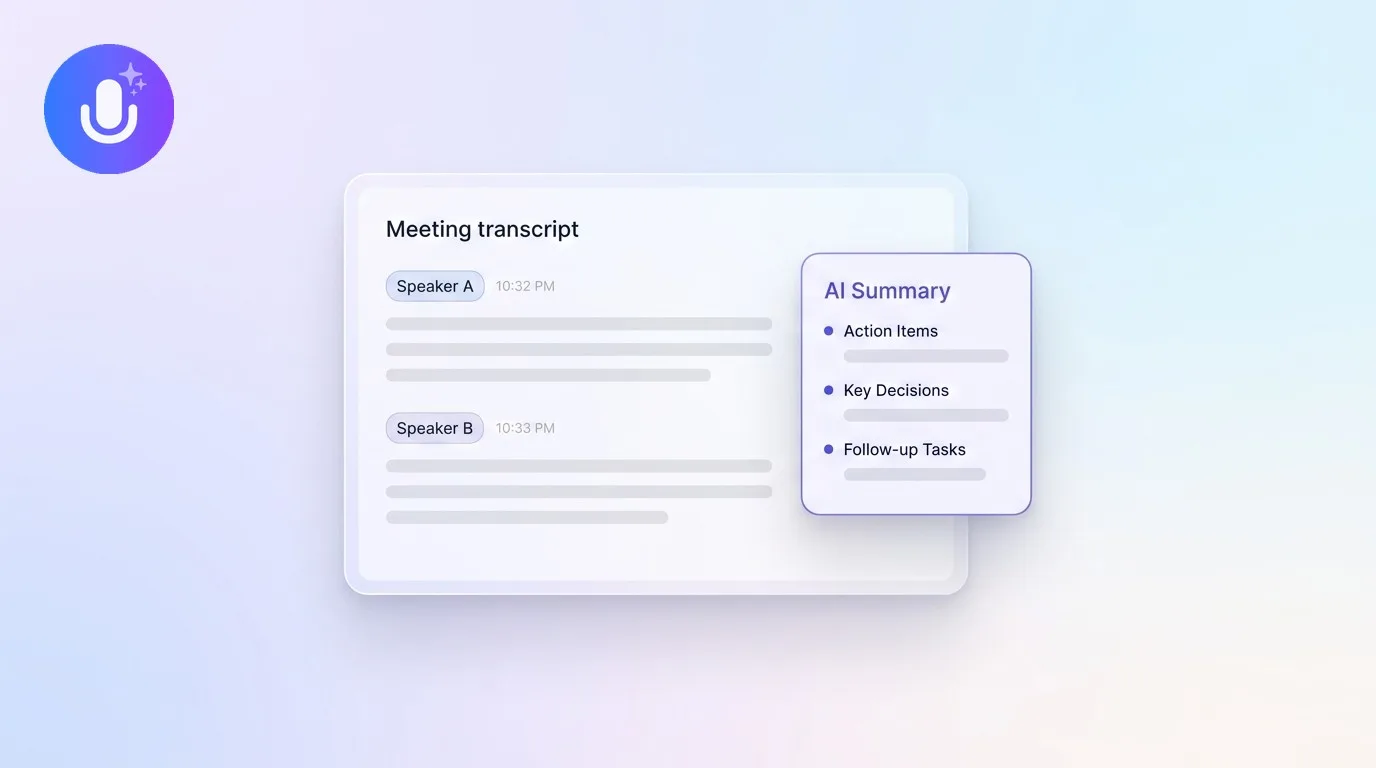
- Decisions: what was agreed, so there's no "wait, what did we decide?" two weeks later
- Action items: the next steps, each with an owner and, ideally, a deadline. An action item without an owner rarely gets done
- Key points: the reasoning behind decisions, and any open questions still unresolved
Everything else, the tangents, the small talk, the half-finished thoughts, is context you can drop.
A before / during / after system
- Before: set up a note with the meeting's purpose, attendees, and expected outcomes. This gives your notes a structure to fill in rather than a blank page you're improvising against mid-conversation.
- During: capture decisions and action items as they happen. Don't transcribe, summarize. Write in fragments, not full sentences. Mark who owns each next step the moment it's assigned, not from memory afterward.
- After: take two minutes to clean up, confirm owners and deadlines while it's fresh, and share with attendees the same day. Notes that sit unshared for a week lose most of their value.
A few structures worth trying
Not every meeting needs the same format. For recurring meetings (standups, 1-on-1s), a running document that carries open items forward week to week beats starting fresh each time. For decision-heavy meetings, a simple table of decision, owner, and rationale is easier to scan later than prose. For brainstorms, capture ideas loosely as they come, then group and prioritize afterward rather than trying to organize on the fly. The common thread is that the structure should match how you'll use the notes later, not how the conversation flowed in the room.
Where typed notes fall short
The hard part of any of this is doing it while also participating. Typing decisions and action items in real time means half your attention is on the keyboard instead of the conversation, and it's easy to miss the moment someone actually commits to something because you were still writing the previous point. It's also easy to lose exact wording, a decision paraphrased slightly wrong in your notes can cause real confusion later.
Or let AI take the notes
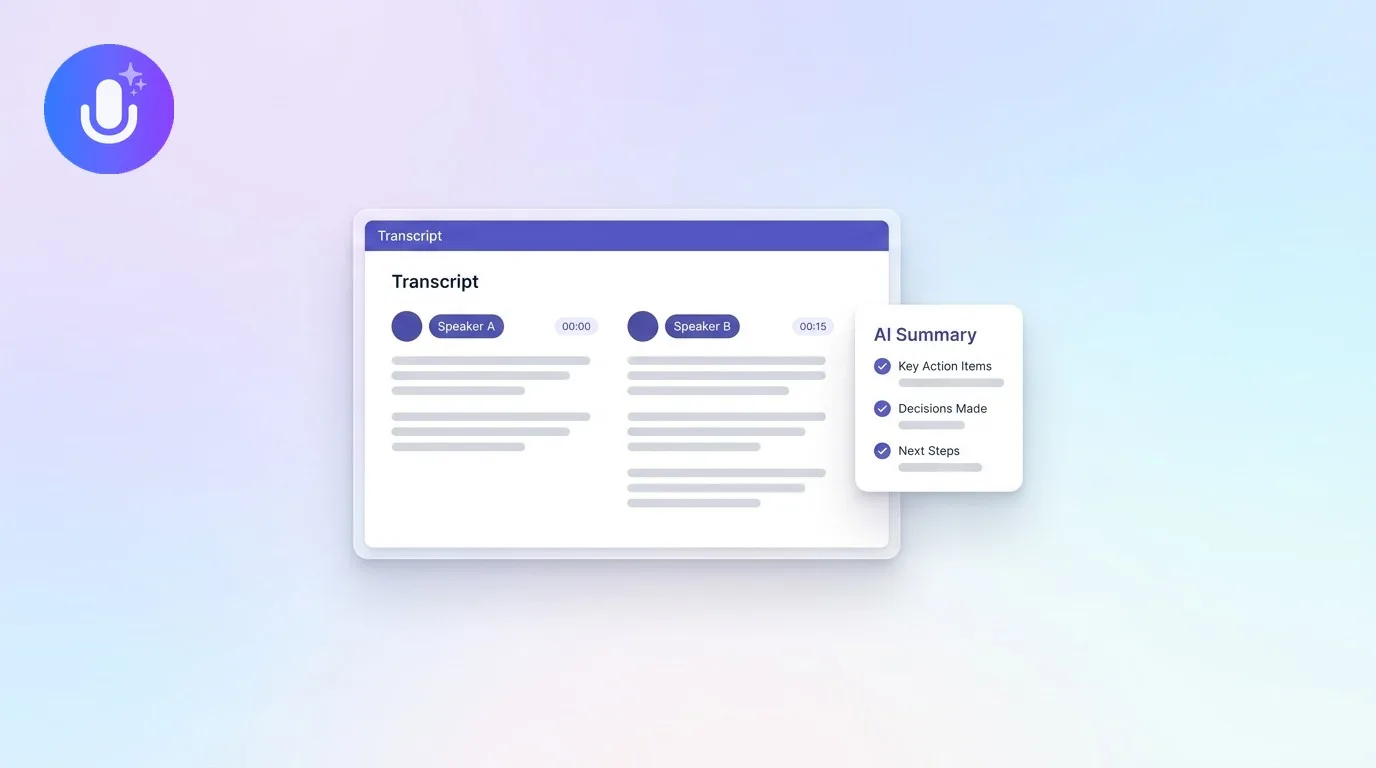
An AI note taker records the meeting, transcribes it, and produces the decisions and action items for you, so you can focus on the conversation and review the notes after, rather than typing during it. CraftNote does this bot-free on Mac, Windows, and Chromium browsers, or with an optional bot on any device, in 100+ languages, and pulls action items into an editable checklist alongside a summary built from one of 30+ templates depending on the type of meeting. You can still edit the transcript and summary afterward to fix anything or add your own notes. Try CraftNote free or read how well it summarizes meetings.
Frequently Asked Questions
What should meeting notes include?
Focus on decisions, action items with owners and deadlines, and the key points behind them, not a word-for-word record. That's what people actually reference later.
How do I take notes and participate at the same time?
It's genuinely hard to do both well. Many people use an AI note taker to record and summarize the meeting so they can stay in the conversation and review structured notes afterward instead of typing during it.
Should I write a full transcript?
Usually not, a full transcript is long and hard to act on. A structured summary of decisions and action items is more useful day to day, though having the transcript available to search is a helpful bonus for the rare time you need an exact quote.
What's the best note format for a recurring meeting?
A running document that carries open action items forward from one meeting to the next, rather than starting a fresh note each time, makes it easier to see what's still outstanding.
Related reading
Turn this into action with CraftNote
Record meetings and lectures, then get AI transcripts, summaries, and action items.
Try CraftNote free